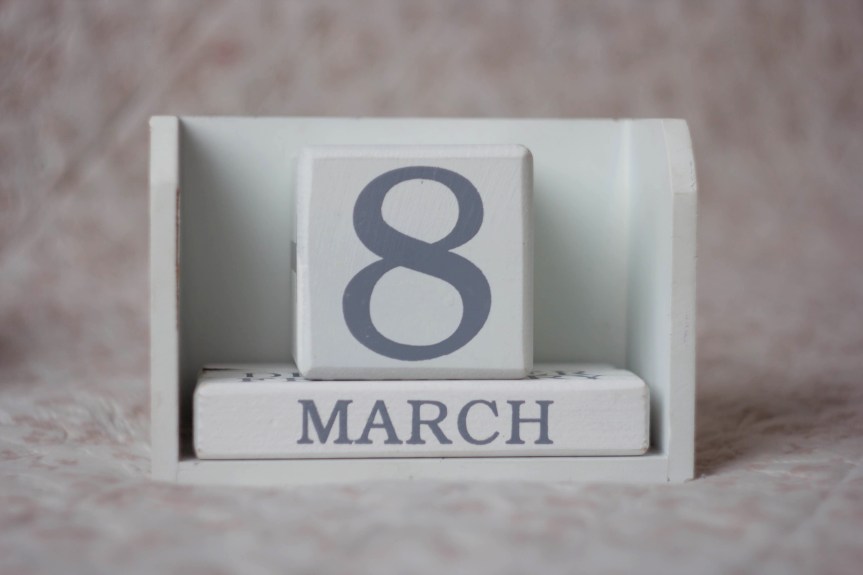
It’s that time of year when everybody likes to jump on the Women’s Day bandwagon; when we all like to tag badass women and bodacious babes, and we digitally high-five all our favourite celebrities for being so #feminist. When it comes to IWD however, this badass woman has some #feelings.
I come from a long line of strong women, and I was brought up to believe that my gender was not a barrier to what I wanted to achieve in life. My childhood experiences led me to turn that belief into knowledge: from frequenting Working Women (a small shop selling make up and jewellery, owned and staffed by bold local women in the Islamic country I spent a number of my teenage years in) to my latter years at an overachieving, all girls and ardently feminist school. So it was a sobering experience for me to enter an industry where the female workforce currently stands at a mere 16% in the UK. Worse still, to experience nonchalant sexism on a daily basis.
In my second week in a management role at one company, it was assumed I was a new administrator on account of being female, which made me at once very angry and very sad: these people had mothers, wives and daughters. You would think therefore, that I would be staunchly pro-feminism and jumping up and down on my proverbial soapbox come the 8th of March each year. Yet whilst I love the sentiment of remembering the sacrifices made by women in the past to achieve the rights we take for granted now, and agree that its important to give shout outs to the women in our lives, it has to be said that I’m less pro-female and more pro-people.
Earlier this week, I took it upon myself to try to find out a bit more about the historical residents of our Victorian house. I found census information online, and it turns out that the matriarch of the household, Sarah Ann, had given birth to 10 children by 1901. Only 6 survived. That in itself is pretty awful, especially when considering those that did survive all lived with her and her husband, in what was then only a four roomed cottage. She had no job, could not vote, and had no choice but to stay home and raise her children. How awful, you might think, that she couldn’t pop them in daycare and hop on the 7.37 to Waterloo ready for a latte and a day in the office! But consider for a moment her husband, James, who worked hauling coal on the wharf each day, come rain or shine, and had no choice but to provide for his large family, as per gender norms. I imagine life wasn’t so grand for him, either.
Fast forward 117 years, and here we are. Granted, we as women can aspire to a bit more than just popping out babies now, but in my eyes we still have similar challenges. My male friend feels he has to ‘man up’ and return to work, when in all honesty he wants to bond with his newborn son, at home with his wife. I’ve watched aghast as friends in other industries have resigned themselves to choosing between career progression or children. This is before we even consider that ethnic minority groups are massively under represented in my industry, as are people of non-Christian backgrounds, or with any religion at all… And just forget about being a gay man. Frankly, women don’t know how good they’ve got it in STEM businesses, with the platform that International Women’s Day offers them and the quotas that the ‘powers that be’ are so desperate to fill.
Therefore this International Women’s Day, I urge you not only to celebrate women (because we are great!) but also just people in general. Look how far we’ve come from James’ days spent on the wharf, to keep the fire burning for his huge family. We live in an age where my childhood teachings are true: where we believe we can be who we want to be. But let’s look ahead to where we could be: where we not only believe it, but know it through demonstrative change in the business world. Let us push for true equality: where it’s not about giving more opportunities to women, it’s about challenging our perceptions. It’s about giving open opportunities to all, and judging people in the workplace on skills and attitude rather than gender, sexuality, religion, race, or anything else. But most of all, it is about making work accessible and enjoyable for people: flexing with rather than pushing against their lifestyle, aspirations and merits, to get the best out of them.
At the end of the day, the important statistics are not whether you’ve managed to give jobs to the right number of bra-wearers, but how happy and engaged your people are and how your business performs. The great thing is that these outcomes are usually related. So just imagine what a bit less tokenism and a bit more flexibility and fairness could achieve in your place of work, and consider being pro-people, rather than just pro-female this year.
Yours truly, your favourite bad feminist,
Mrs. PJ
 Paper Jam in Tray 3